
The Best Travel Snacks and Meal Tips for Eating Healthy on the Road

Article reviewed by Adrienne Raimo
Article reviewed by Adrienne Raimo
Registered Dietitian Nutritionist
Integrative & functional dietitian-nutritionist
Maintaining healthy eating habits while traveling can be a daunting challenge. Whether it's navigating airport food courts, dining out at unfamiliar restaurants, or sticking to a routine on the road, staying on track requires planning and adaptability.
Adrienne Raimo, a Registered Dietitian-Nutritionist and Columbia University Certified Health Coach, specializes in helping individuals build sustainable, personalized strategies for better health. Since many of her clients travel frequently, Adrienne is full of practical tips and insights to help travelers make healthier choices without sacrificing convenience or enjoyment.
Here are her top tips for making healthy eating a natural part of travel.
Book a Room with a Kitchenette
One of the simplest ways to maintain healthy eating habits while traveling is to book a room with a kitchenette. Having access to a mini fridge, stovetop, or microwave allows for greater control over meals, making it easier to stick to nutritious options.
Adrienne recommends this strategy for frequent travelers, especially those staying in the same destinations repeatedly. By purchasing fresh ingredients from a local grocery store, travelers can prepare quick, healthy meals in their room, avoiding the reliance on restaurant food for every meal. This setup not only supports healthier eating but can also save time and money during a trip. It's an ideal option for anyone looking to prioritize their health without adding unnecessary complexity to travel plans.
Choose Healthier Options when Dining Out
Travel often means eating many meals out, whether it's sitting down to enjoy a meal at a restaurant or grabbing something quickly on the road.
If you're visiting the same cities or locations regularly, researching healthier restaurant options in advance can make a significant difference. Adrienne suggests identifying restaurants near your usual accommodations that offer nutritious menu items. This proactive approach reduces the stress of last-minute decisions and ensures you have reliable go-to options for balanced meals.
For chain restaurants or franchises with nutrition information available online, Adrienne advises checking this to find options that appeal to you while meeting your health goals before dining. Since franchises will be in many of the locations that you travel, taking the time to identify healthy menu options once can pay off anywhere you travel in the future.
For restaurants that don't list nutrition information, Adrienne recommends applying general healthy eating principles. "If you're going to have pasta, instead of the white creamy Alfredo sauce that's higher in calories and fat, maybe try the marinara," she suggests.
Another tip for restaurants? "Always ask for dressing on the side so you can control how much goes in."
Pack Travel Snacks for the Car and Plane
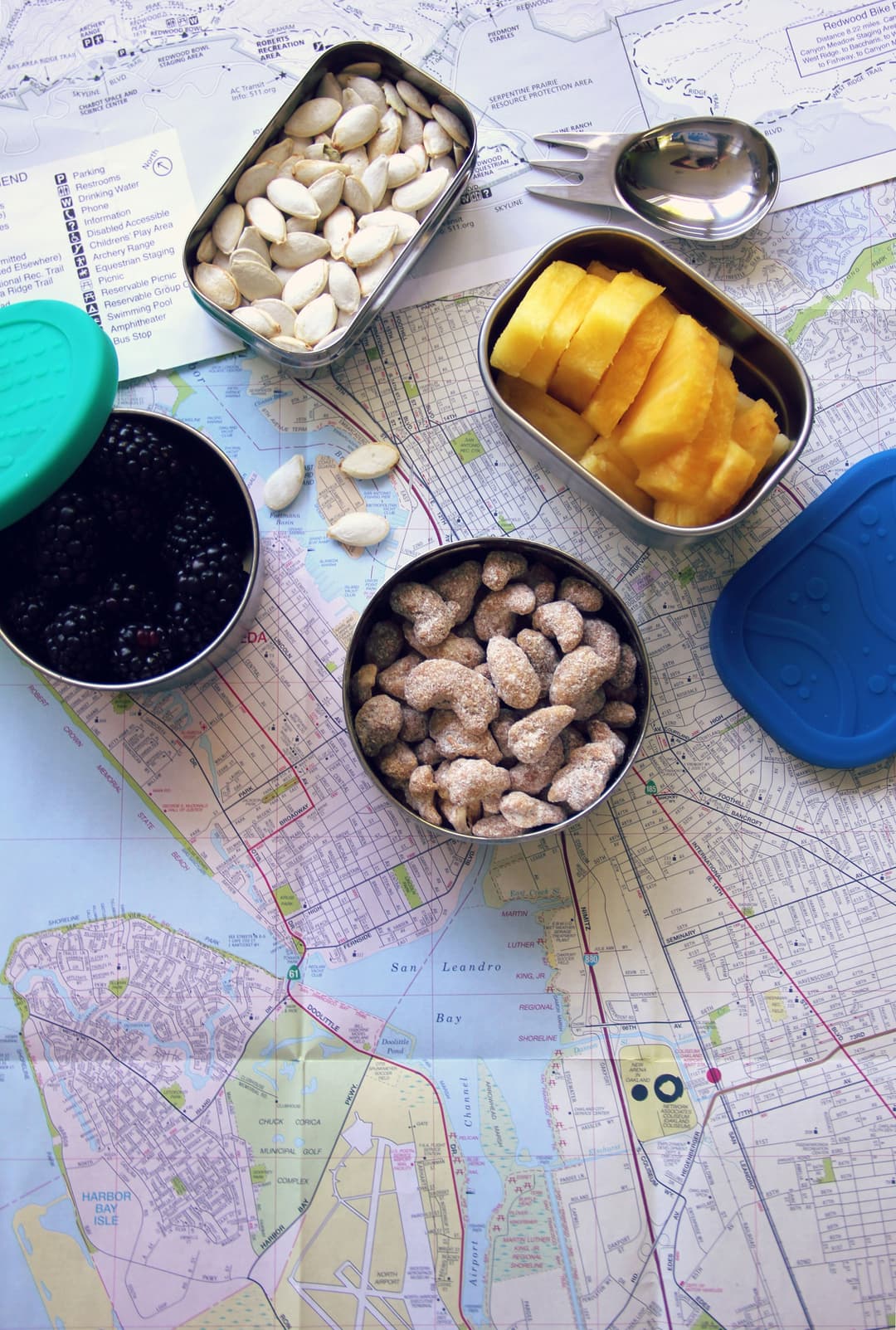
Packing healthy snacks for your trip—whether by car or plane—can help you avoid unhealthy, expensive options and stay energized. Adrienne emphasizes the importance of choosing snacks that are portable, satisfying, and tailored to your dietary needs. Below are her top recommendations:
Adrienne's Favorite Travel Snacks:
Celery and Carrots with Peanut Butter: "You're never too old for ants on a log," Adrienne says. These provide crunch, protein, and healthy fats.
Larabars or Homemade Bars: Packed with simple, clean ingredients, these are great for quick energy without added sugars.
Dried Fruit: Options like dried apricots, cherries, or goji berries are easy to pack and provide natural sweetness.
Trader Joe's Olive Packets: "These individually wrapped olive packets are convenient, savory option," Adrienne suggests.
Popcorn: Light and portable, it's a great option for munching during a long flight.
Pretzels: For those who like crunchy snacks, these work well. Gluten-free options are increasingly available, too.
Edamame or Dried Chickpeas: High in protein and easy to eat on the go, these are great for plant-based travelers.
Beef or Coconut Jerky: Whether you prefer traditional or plant-based options, jerky is a protein-packed, portable snack.
Apples and Nuts: These are easy to pack, TSA-friendly, and provide a mix of fiber and healthy fats.
Seaweed Snacks: These are lightweight, nutrient-dense, and easy to pack in your carry-on.
Cucumber: Adrienne's go-to for flights. "It's hydrating and helps you avoid spending $8 on bottled water," she explains.
General Tips for Travel Snacks:
Consider Dietary Needs: "Everything needs to be personalized," Adrienne emphasizes. For example, choose gluten-free pretzels or vegan jerky if needed.
Avoid Strong Smells: Be mindful of your fellow travelers, especially on a plane. Skip overly fragrant foods like sardines or strong cheeses.
Balance Convenience and Nutrition: Focus on snacks that are easy to eat without utensils and don't require refrigeration unless you have a cooler or insulated bag.
Prioritize Hydration: Foods like cucumber and fresh fruit can help keep you hydrated, especially during long flights where water intake can be limited.
By planning ahead and packing a variety of snacks, you can stay nourished and avoid unhealthy temptations, whether you're on the road or in the air.
Adrienne Raimo is an Integrative & Functional Dietitian-Nutritionist located in Columbus, Ohio. Well-respected as an educator and practitioner, Adrienne specializes in using transformative nutrition and lifestyle changes to assist individuals with a wide range of health issues, as well as those seeking to achieve a higher level of wellness. You can find her online at OneBiteWellness.com and on social media.